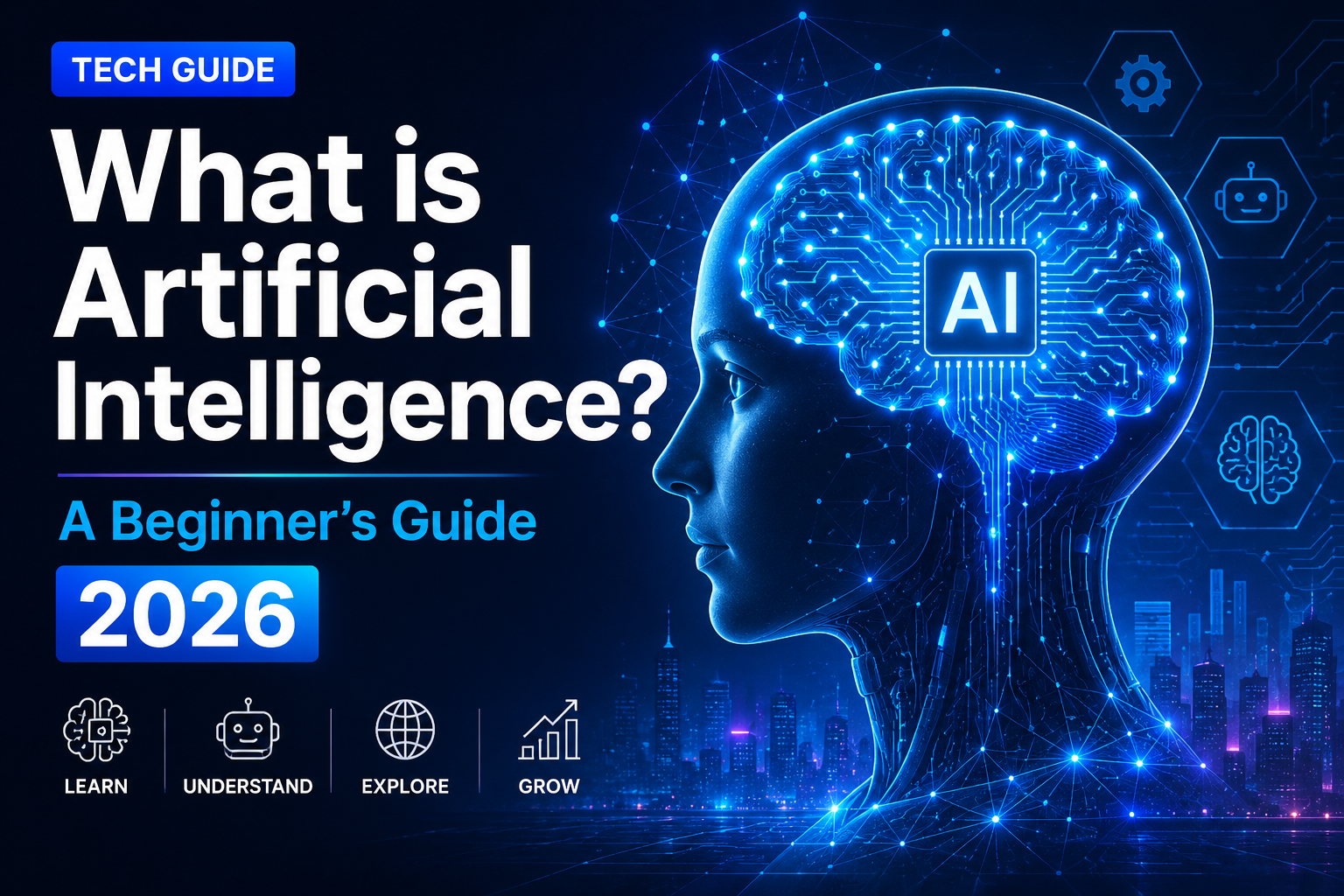
Artificial Intelligence (AI) is no longer just a futuristic concept , it's already part of our daily lives. From smartphones and smart assistants to healthcare and finance, AI is transforming how we live, work, and interact with technology.
In this beginner-friendly guide, you'll learn what AI is, how it works, real-world examples, and why it matters in 2026 and beyond.
What is Artificial Intelligence in Simple Words?
Artificial Intelligence refers to machines or software that can think, learn, and make decisions like humans.
Artificial Intelligence means machines that can think, learn, and make decisions like humans. Instead of just following instructions, AI systems analyze data and improve over time.
In simple words:
AI = Machines that can think and learn
Examples of Artificial Intelligence in Daily Life
Artificial Intelligence is used in many everyday applications such as Google Search, Netflix recommendations, voice assistants like Siri and Alexa, and face recognition on smartphones. These tools use AI to provide smarter and personalized experiences.
AI systems require powerful infrastructure to operate efficiently. Many companies use cloud computing to store data and run AI models at scale.
How Does AI Work?
Artificial Intelligence relies heavily on data to learn and improve. This is where data science plays an important role by helping machines analyze and process large datasets. AI works using a combination of technologies:
1. Machine Learning (ML)
- AI learns from data
- Improves performance over time
2. Deep Learning
- Uses neural networks (like the human brain)
- Powers advanced AI like ChatGPT and image recognition
3. Natural Language Processing (NLP)
- Helps machines understand human language
- Used in chatbots and voice assistants
Real-Life Examples of AI
You are already using AI every day without realizing it:
- Google Search suggestions
- Netflix & YouTube recommendations
- Siri, Alexa, Google Assistant
- Face recognition on phones
- Self-driving cars
Artificial Intelligence in USA and Europe
Artificial Intelligence is rapidly growing in the United States and Europe, where businesses and startups are using AI for automation, data analysis, and innovation. Companies in these regions rely on AI to stay competitive in the digital economy.
AI in Different Industries
Healthcare
- Disease detection
- Medical imaging
- Drug discovery
Business
Artificial Intelligence is transforming modern businesses by automating tasks and improving decision-making. If you want to apply these technologies, learning how to start a business in 2026 can help you build a successful and future-ready company.
- Customer support chatbots
- Data analysis
- Fraud detection
Education
- Personalized learning
- AI tutors
Technology
- Smart devices
- Automation
- Robotics
Benefits of Artificial Intelligence
- Saves time and effort
- Improves accuracy
- Automates repetitive tasks
- Enhances decision-making
- Works 24/7
Challenges of AI
- Job displacement concerns
- Data privacy issues
- High development cost
- Ethical concerns
Future of AI (2026 and Beyond)
AI is expected to become even more powerful in the coming years:
- Smarter virtual assistants
- Fully autonomous vehicles
- AI-powered healthcare systems
- Advanced robotics
AI will not replace humans but people who use AI will replace those who don't.
Conclusion
Artificial Intelligence is shaping the future of the world. Whether in business, healthcare, or daily life, AI is becoming an essential part of modern society.
Understanding AI today will help you stay ahead in tomorrow's world.
Frequently Asked Questions (FAQs)
What is artificial intelligence in simple words?
AI means machines that can think and learn like humans
What are examples of AI?
Examples include Google Search, Netflix recommendations, and voice assistants.
Why is AI important?
AI improves efficiency, automation, and decision-making.