In today’s digital era, businesses and individuals rely heavily on technology to store data, run applications, and manage operations. One of the most powerful innovations driving this transformation is cloud computing. From streaming services to online storage and enterprise systems, cloud computing is everywhere.
But what is cloud computing? Why is it so important, and how does it work?
In this comprehensive guide, we will explain cloud computing in simple words, explore its types, benefits, real-world applications, and how it is shaping the future of technology in 2026 and beyond.
What is Cloud Computing in simple words?
Definition of Cloud Computing
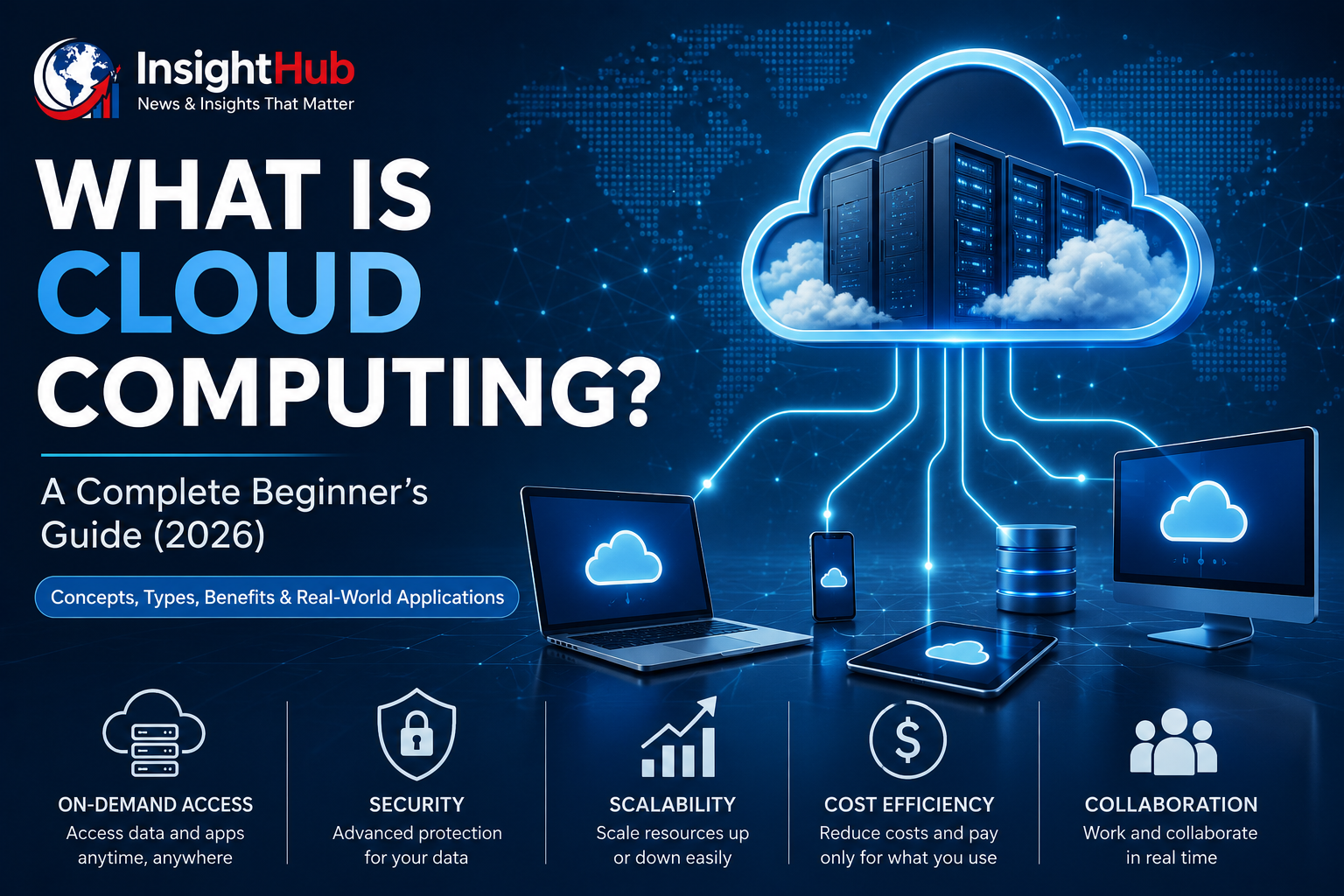
Cloud computing is the delivery of computing services—including servers, storage, databases, networking, software, and analytics—over the internet (“the cloud”) instead of using local computers or physical servers.
👉 In simple words:
Cloud computing allows you to access data and applications online instead of storing them on your own device.
How Cloud Computing Works
Cloud computing works through a network of remote servers hosted on the internet.
Basic Process:
- Data is stored on cloud servers
- Users access it via the internet
- Providers manage infrastructure
- Services are delivered on demand
Types of Cloud Computing Explained (Public, Private & Hybrid)
1. Public Cloud
- Services are provided over the internet
- Shared among multiple users
- Example: Google Cloud, AWS
2. Private Cloud
- Dedicated to a single organization
- Higher security and control
3. Hybrid Cloud
- Combination of public and private clouds
- Offers flexibility and scalability
Cloud Service Models
1. IaaS (Infrastructure as a Service)
- Provides virtual machines and storage
- Example: AWS EC2
2. PaaS (Platform as a Service)
- Provides development platforms
- Example: Google App Engine
3. SaaS (Software as a Service)
- Software delivered via browser
- Example: Gmail, Zoom
Why Cloud Computing is Important
Cloud computing is essential for modern businesses and individuals.
Key Reasons:
- Reduces infrastructure costs
- Provides scalability
- Enables remote work
- Improves collaboration
- Enhances data security
Top Benefits of Cloud Computing for Businesses and Individuals
1. Cost Efficiency
No need to buy expensive hardware.
2. Scalability
Easily increase or decrease resources.
3. Accessibility
Access data from anywhere.
4. Security
Advanced encryption and protection.
5. Automatic Updates
No manual maintenance required.
Examples of Cloud Computing in Daily Life
Cloud computing is used in everyday services such as Google Drive for file storage, Netflix for streaming, and Gmail for email communication. These platforms rely on cloud technology to deliver fast and reliable services over the internet.
Applications of Cloud Computing
1. Data Storage
Cloud platforms store massive amounts of data.
2. Software Applications
Apps run directly in browsers.
3. Backup & Recovery
Protects data from loss.
4. Big Data & Analytics
Used for data processing and insights.
Cloud computing plays a crucial role in handling large volumes of data and enabling advanced analytics. Businesses and organizations rely on cloud platforms to store, process, and analyze data efficiently in real time. To better understand how data is transformed into valuable insights, you can explore data science, which works closely with cloud computing to drive smarter decisions and innovation.
5. Artificial Intelligence
Cloud powers AI tools and models.
Cloud Computing vs Traditional Computing
| Feature | Cloud Computing | Traditional |
|---|---|---|
| Cost | Low upfront | High upfront |
| Access | Anywhere | Local |
| Maintenance | Automatic | Manual |
Real-Life Examples of Cloud Computing
- Google Drive
- Dropbox
- Netflix
- Microsoft Azure
Cloud Computing in Business
Businesses use cloud computing for:
- Customer management
- Data storage
- Online services
- Remote collaboration
Cloud computing plays a vital role in modern entrepreneurship by allowing businesses to operate without heavy investment in physical infrastructure. From storing data to running applications online, the cloud makes it easier to launch and manage operations efficiently. If you are planning to enter the entrepreneurial world, understanding how to start a business in 2026 can help you leverage cloud technologies for faster growth, reduced costs, and better scalability.
Cloud Computing and Cybersecurity
Security is a major concern in cloud computing.
Protection Methods:
- Encryption
- Firewalls
- Access control
Challenges of Cloud Computing
1. Data Privacy
2. Internet Dependency
3. Limited Control
Future of Cloud Computing
Cloud computing will continue to grow rapidly.
Trends:
- AI integration
- Edge computing
- Serverless architecture
- Hybrid cloud adoption
Cloud Computing and IoT
Cloud is essential for Internet of Things(IoT) devices.
Skills Required for Cloud Computing
- Networking basics
- Cloud platforms (AWS, Azure)
- Security knowledge
Cloud Computing in USA and Europe
Cloud computing adoption is rapidly growing in the United States and Europe. Businesses and startups in these regions rely on cloud platforms to scale operations, reduce costs, and improve efficiency. From tech companies in Silicon Valley to startups across Europe, cloud technology plays a key role in digital transformation.
How to Start Learning Cloud Computing
Step 1: Learn basics
Step 2: Choose platform
Step 3: Practice projects
Step 4: Get certified
Conclusion
Understanding what is cloud computing is essential in today’s technology-driven world. It enables businesses and individuals to store, manage, and process data efficiently without relying on physical infrastructure.
As cloud technology continues to evolve, it will play a crucial role in shaping the future of digital transformation, making it one of the most important skills and concepts to learn in 2026.
Cloud computing is not just a technology trend but a fundamental part of modern digital infrastructure. As businesses continue to move online, understanding cloud computing becomes essential for growth, innovation, and long-term success.
Frequently Asked Questions (FAQs)
What is cloud computing in simple words?
Cloud computing means storing and accessing data over the internet instead of your computer.
What are examples of cloud computing?
Examples include Google Drive, Netflix, and Dropbox.
Why is cloud computing important?
It helps reduce costs, improve flexibility, and allows remote access to data.