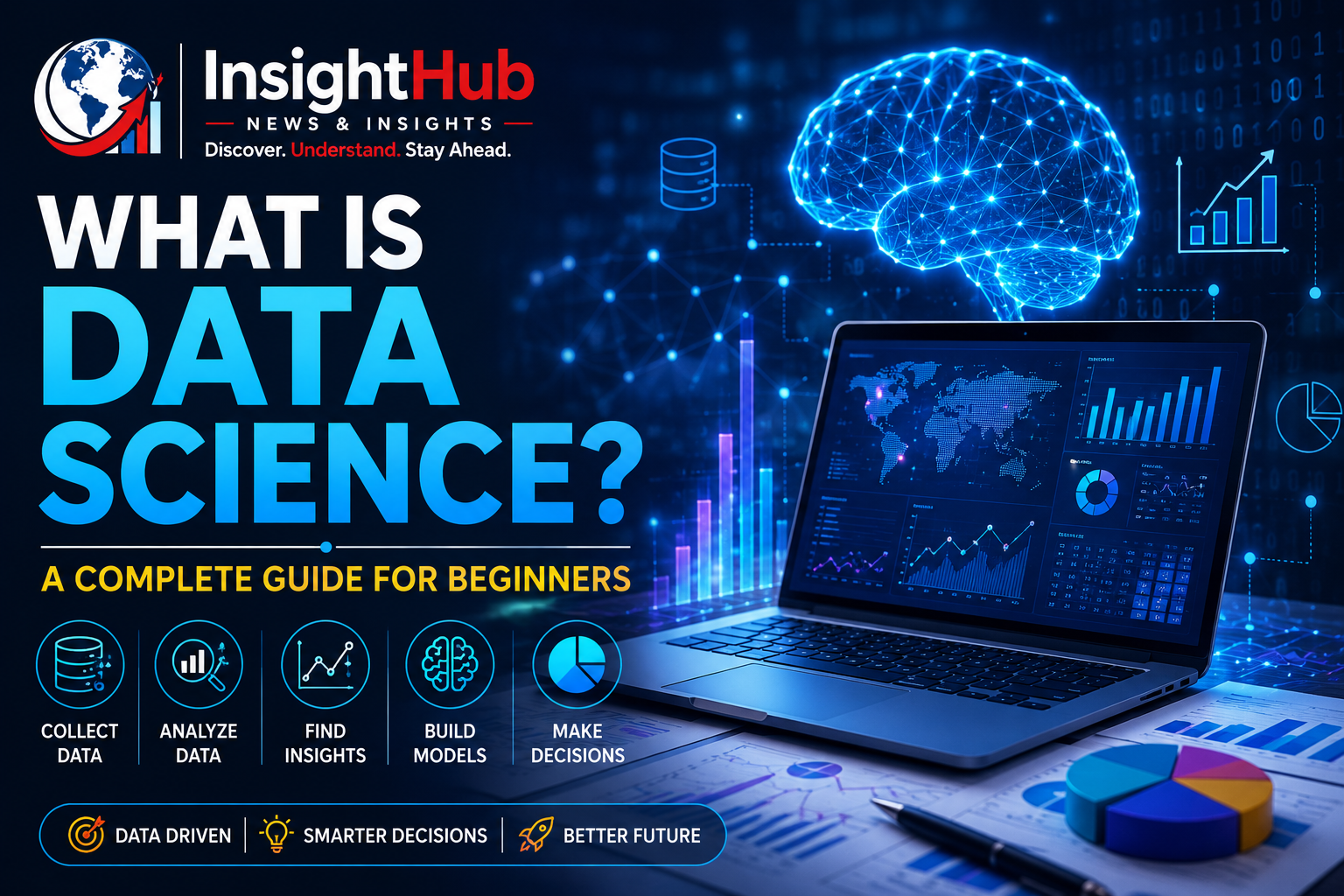
In today’s digital world, data is everywhere. From social media interactions and online shopping to healthcare records and financial transactions, vast amounts of data are generated every second. But raw data alone is not useful unless it is analyzed and transformed into meaningful insights. This is where Data Science comes into play.
So, what is Data Science? Why is it one of the most in-demand fields today? And how does it impact industries across the globe?
In this comprehensive guide, we will explore everything you need to know about Data Science, including its definition, importance, tools, applications, and future scope.
What is Data Science in Simple Words?
Definition of Data Science
Data Science means collecting and analyzing data to find useful information. In simple terms, it helps businesses and organizations make better decisions by understanding patterns and trends from data.
It combines:
- Statistics
- Mathematics
- Programming
- Machine Learning
- Data Analysis
👉 In simple words:-
Data Science is the process of turning data into useful information.
Why is Data Science Important?
Data Science plays a crucial role in modern decision-making.
Key Reasons:
- Helps businesses make data-driven decisions
- Identifies trends and patterns
- Improves efficiency and productivity
- Enables predictive analysis
- Supports innovation
Key Components of Data Science
1. Data Collection
Data is gathered from various sources such as:
- Databases
- APIs
- Sensors
- Websites
2. Data Cleaning
Raw data is often messy and incomplete.
Cleaning includes:
- Removing errors
- Handling missing values
- Formatting data
3. Data Analysis
Data scientists analyze data to find patterns and relationships.
4. Data Visualization
Insights are presented using:
- Charts
- Graphs
- Dashboards
5. Machine Learning
Machine learning models help predict outcomes based on data.
Types of Data Science Explained (Descriptive, Predictive & Prescriptive)
1. Descriptive Analytics
- Explains what happened
- Uses historical data
2. Predictive Analytics
- Predicts future outcomes
- Uses machine learning
3. Prescriptive Analytics
- Suggests actions
- Helps decision-making
Data Science vs Data Analytics
| Feature | Data Science | Data Analytics |
|---|---|---|
| Scope | Broad | Narrow |
| Focus | Prediction | Analysis |
| Tools | ML, AI | BI tools |
Top Tools Used in Data Science (Python, SQL, Machine Learning)
Programming Languages
- Python
- R
- SQL
Libraries & Frameworks
- Pandas
- NumPy
- TensorFlow
- Scikit-learn
Visualization Tools
- Tableau
- Power BI
- Matplotlib
Applications of Data Science
Modern data science applications rely heavily on scalable systems. Many companies use cloud computing to store and process large amounts of data efficiently.
1. Healthcare
- Disease prediction
- Patient monitoring
2. Business
Data science plays a major role in business growth by helping companies analyze customer behavior and improve strategies. If you are planning to build your own venture, learning how to start a business in 2026 can help you apply data-driven decisions effectively.
- Customer insights
- Sales forecasting
3. Finance
- Fraud detection
- Risk analysis
4. Marketing
- Targeted ads
- Customer behavior analysis
5. Technology
- AI development
- Smart systems
Examples of Data Science in Daily Life
Data science is used in everyday platforms such as Netflix for movie recommendations, Amazon for product suggestions, and Google for search results. These systems analyze user data to deliver personalized experiences.
Benefits of Data Science
1. Better Decision Making
2. Increased Efficiency
3. Cost Reduction
4. Personalized Experience
5. Competitive Advantage
Challenges in Data Science
1. Data Privacy Issues
2. Data Quality Problems
3. High Cost of Tools
4. Skill Gap
Skills Required for Data Science
Technical Skills
- Programming
- Statistics
- Machine Learning
Soft Skills
- Problem-solving
- Communication
- Analytical thinking
How to Start Learning Data Science
Step 1: Learn Basics
- Statistics
- Python
Step 2: Practice Projects
- Data analysis projects
Step 3: Learn Machine Learning
Machine learning is a key part of data science that allows systems to learn from data automatically. To understand this better, you can explore artificial intelligence and how it powers modern technologies.
Step 4: Build Portfolio
Data Science in USA and Europe
Data science is rapidly growing in the United States and Europe, where companies use data-driven strategies to improve performance and innovation. From tech startups to large enterprises, data science plays a key role in decision-making and business growth in these regions.
Future of Data Science
Data Science is growing rapidly.
Future Trends:
- AI integration
- Automation
- Big data expansion
- Real-time analytics
Data Science and Artificial Intelligence
Data Science and AI are closely related.
👉 AI uses data
👉 Data Science provides insights
Data Science in Everyday Life
- Weather predictions
- Online recommendations
- Navigation apps
Common Myths About Data Science
Myth 1: Only for Programmers
👉 Reality: Anyone can learn
Myth 2: Requires Advanced Math
👉 Reality: Basic math is enough to start
Data science is not just a technical field but a powerful tool for solving real-world problems. As industries continue to rely on data, the demand for data science skills will continue to grow globally.
Conclusion
Understanding what is Data Science is essential in today’s data-driven world. It helps businesses, organizations, and individuals make smarter decisions and unlock the true potential of data.
As technology continues to evolve, Data Science will play an even bigger role in shaping the future.
Frequently Asked Questions (FAQs)
What is Data Science in simple words?
Data Science is the process of collecting, analyzing, and interpreting data to find useful insights and support decision-making.
What are the main uses of Data Science?
Data Science is used in healthcare, finance, marketing, and technology to predict trends, improve decisions, and automate processes.
Is Data Science a good career in 2026?
Yes, Data Science is one of the most in-demand careers with high salaries and strong future growth across industries.
What skills are required for Data Science?
Key skills include programming (Python, R), statistics, machine learning, and data visualization.
What is the difference between Data Science and Artificial Intelligence?
Data Science focuses on analyzing data, while Artificial Intelligence uses that data to build intelligent systems and automation.
Can beginners learn Data Science?
Yes, beginners can start learning Data Science by understanding basic statistics, programming, and working on small projects.