Introduction
In today's fast-paced digital world, businesses no longer rely solely on traditional advertising methods like newspapers, billboards, or television. Instead, they are shifting toward a more powerful, measurable, and cost-effective approach-digital marketing.
But what exactly is digital marketing? Why is it so important? And how can beginners understand and use it effectively?
In this comprehensive guide, we'll break down everything you need to know about digital marketing, its types, benefits, strategies, and future trends.
To explore more in-depth articles on technology, business, and innovation, visit InsightHub.
What is Digital Marketing?
Definition of Digital Marketing
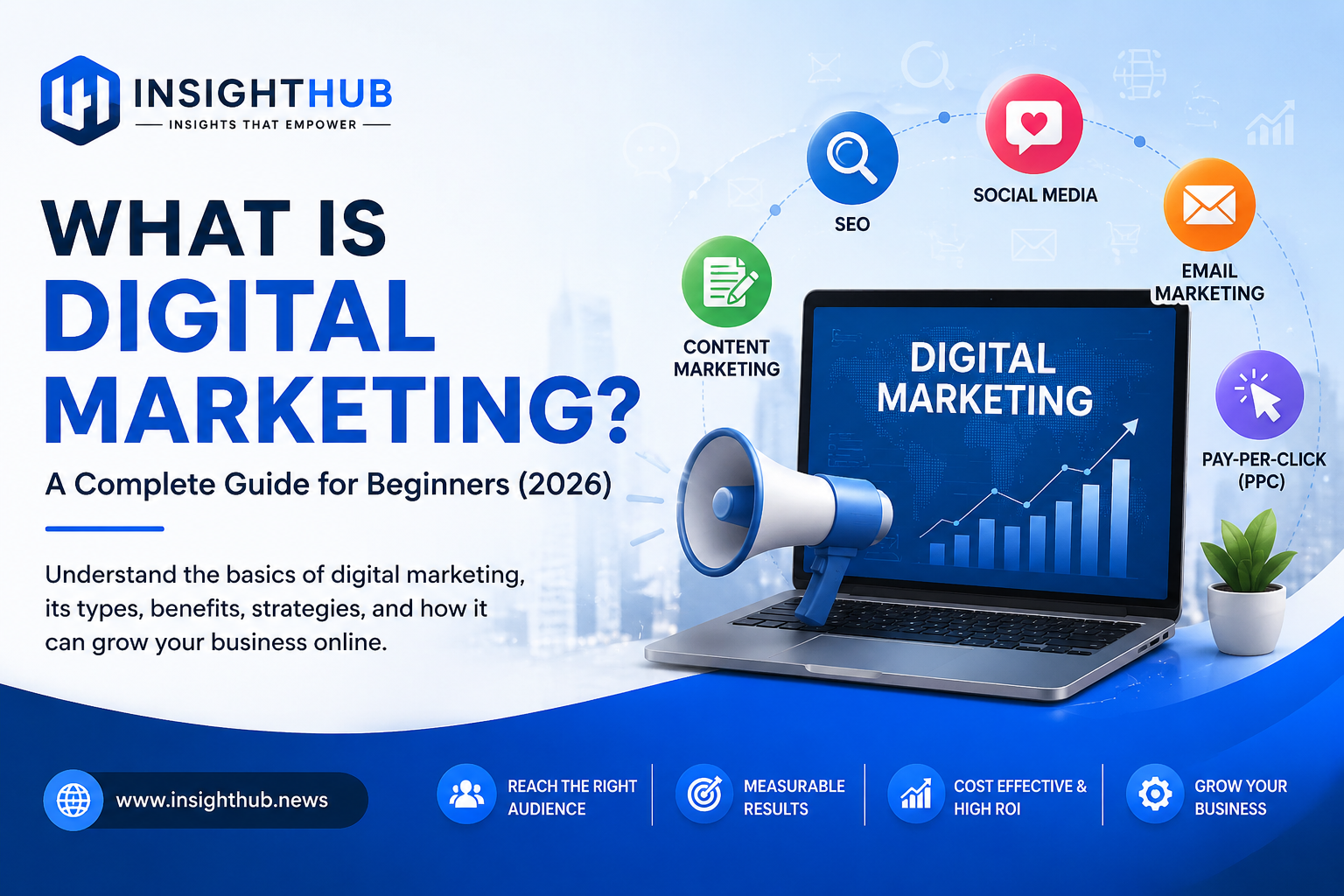
Digital marketing refers to the use of digital channels, platforms, and technologies to promote products or services to consumers. These channels include:
- Search engines (Google, Bing)
- Social media (Facebook, Instagram, LinkedIn)
- Websites
- Mobile apps
Unlike traditional marketing, digital marketing allows businesses to target specific audiences, track performance in real time, and optimize campaigns for better results.
Why Digital Marketing is Important in 2026
Digital marketing has become essential for businesses of all sizes. Here's why:
1. Global Reach
With digital marketing, even a small business can reach a global audience without a massive budget.
2. Cost-Effective
Compared to traditional marketing, digital campaigns are much cheaper and provide better ROI.
3. Measurable Results
You can track:
- Website traffic
- Click-through rates (CTR)
- Conversions
- Engagement
4. Targeted Audience
Digital marketing allows precise targeting based on:
- Location
- Age
- Interests
- Behavior
Types of Digital Marketing
1. Search Engine Optimization (SEO)
SEO is the process of optimizing your website to rank higher on search engines like Google. Cybersecurity plays a crucial role in protecting digital marketing systems.
Key SEO Techniques:
- Keyword optimization
- On-page SEO (titles, meta tags)
- Technical SEO
- Backlink building
2. Content Marketing
Content marketing focuses on creating valuable content to attract and engage users.
Examples include:
- Blog posts
- Articles
- Videos
- Infographics
High-quality content helps build trust and authority.
3. Social Media Marketing
This involves promoting your brand on platforms like:
- Twitter (X)
Benefits:
- Brand awareness
- Audience engagement
- Traffic generation
4. Pay-Per-Click Advertising (PPC)
PPC is a paid advertising model where you pay when someone clicks your ad.
Examples:
- Google Ads
- Facebook Ads
5. Email Marketing
Email marketing is one of the most effective digital marketing strategies.
It includes:
- Newsletters
- Promotional emails
- Automated campaigns
6. Affiliate Marketing
Affiliate marketing involves promoting other people's products and earning a commission.
7. Influencer Marketing
Brands collaborate with influencers to promote their products to a larger audience.
How Does Digital Marketing Work?
Digital marketing works by using online channels like search engines, social media, and email to reach targeted audiences and convert them into customers.
Key Components of a Digital Marketing Strategy
1. Website Optimization
Your website is the foundation of digital marketing.
Make sure it is:
- Fast
- Mobile-friendly
- SEO optimized
2. Keyword Research
Keyword research helps you understand what users are searching for.
Example keywords:
- What is digital marketing
- Digital marketing for beginners
- Online marketing strategies
3. Content Creation
Content should be:
- Informative
- Engaging
- SEO-friendly
4. Analytics and Tracking
Use tools like:
- Google Analytics
- Facebook Ads Manager
to measure performance.
Benefits of Digital Marketing
1. Increased Brand Awareness
Digital marketing helps your brand reach more people.
2. Higher Conversion Rates
Targeted campaigns lead to better conversions.
3. Better Customer Engagement
You can interact directly with your audience.
4. Flexibility and Scalability
Campaigns can be adjusted anytime.
Digital Marketing vs Traditional Marketing
| Feature | Digital Marketing | Traditional Marketing |
|---|---|---|
| Cost | Low | High |
| Targeting | Precise | Broad |
| Measurement | Real-time | Difficult |
| Reach | Global | Local |
Common Digital Marketing Mistakes
1. Ignoring SEO
Without SEO, your content won't rank.
2. Not Understanding Audience
Targeting the wrong audience wastes money.
3. Poor Content Quality
Low-quality content reduces engagement.
4. No Analytics Tracking
Without data, you cannot improve.
Latest Digital Marketing Trends in 2026
1. AI in Marketing
Artificial intelligence is transforming marketing strategies.
2. Voice Search Optimization
More users are using voice assistants.
3. Video Content Growth
Short videos dominate platforms like Instagram Reels.
4. Personalization
Customized content improves user experience.
How to Start Digital Marketing (Beginner Guide)
Step 1: Create a Website
Your website is your digital presence.
Step 2: Learn SEO Basics
Focus on:
- Keywords
- On-page SEO
- Content optimization
Step 3: Start Content Creation
Write articles like:
- What is Digital Marketing
- What is Cybersecurity
Future of Digital Marketing
Digital marketing will continue to evolve with technology.
Future trends include:
- AI-driven campaigns
- Automation
- Advanced analytics
- Hyper-personalization
Businesses that adapt quickly will succeed.
Conclusion
Digital marketing is no longer optional-it is essential for success in today's digital world.
From SEO and content marketing to social media and paid ads, digital marketing offers endless opportunities for growth.
If you're just starting, focus on:
- Learning basics
- Creating quality content
- Running small campaigns
Explore more guides on InsightHub to stay ahead in the digital world
Frequently Asked Questions (FAQs)
What is digital marketing in simple words?
Digital marketing is the use of online platforms like search engines, social media, and websites to promote products or services.
What are the types of digital marketing?
The main types include SEO, social media marketing, content marketing, email marketing, and paid advertising.
How can beginners start digital marketing?
Beginners can start by learning SEO basics, creating content, and running small ad campaigns.