Introduction
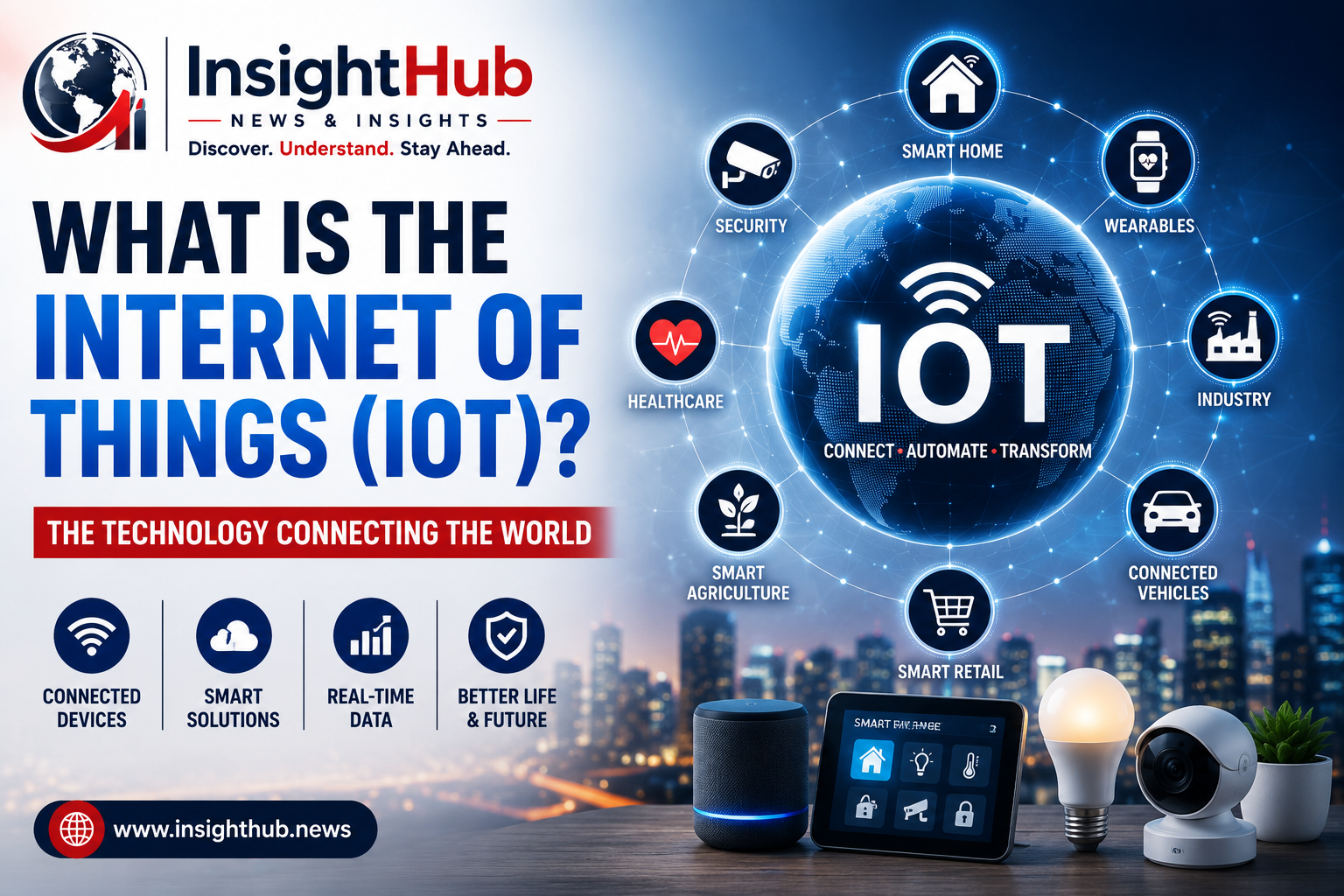
The world is becoming smarter and more connected every day. From smart homes and wearable devices to industrial automation, technology is transforming how we live and work. At the center of this transformation lies a powerful concept known as the Internet of Things (IoT).
But what exactly is IoT? How does it work? And why is it considered one of the most important technologies of the modern era?
In this comprehensive guide, we will explore everything you need to know about what the Internet of Things (IoT) is, its applications, benefits, challenges, and future potential. Visit InsightHub for more technology insights
Many IoT devices are now part of everyday life, including smart home tools and wearable tech. Check out the most popular ones in Top 10 Gadgets in 2026.
What is the Internet of Things (IoT)?
Definition of IoT
The Internet of Things (IoT) refers to a network of physical devices connected to the internet that can collect, share, and exchange data.
These devices include:
- Smartphones
- Smart home devices (lights, thermostats)
- Wearable fitness trackers
- Industrial machines
- Vehicles
In simple terms, IoT allows everyday objects to become �smart� by connecting them to the internet.
How Does IoT Work?
Understanding how IoT works is essential to grasp its importance.
Key Components of IoT
1. Devices (Sensors & Actuators)
Devices collect data from the environment.
Examples:
- Temperature sensors
- Motion detectors
- Heart rate monitors
2. Connectivity
Devices connect to the internet using:
- Wi-Fi
- Bluetooth
- Cellular networks
- Satellite
3. Data Processing
Collected data is sent to cloud systems for processing.
4. User Interface
Users interact with IoT systems through:
- Mobile apps
- Dashboards
- Web interfaces
Types of Internet of Things (IoT)
1. Consumer IoT
Used in everyday life:
- Smart TVs
- Smart refrigerators
- Fitness trackers
2. Industrial IoT (IIoT)
Used in industries:
- Manufacturing automation
- Predictive maintenance
- Supply chain monitoring
3. Healthcare IoT
Applications include:
- Remote patient monitoring
- Smart medical devices
- Wearable health trackers
4. Smart Cities IoT
Used for:
- Traffic management
- Waste management
- Smart lighting
Real-Life Examples of IoT
Smart Homes
- Smart lights that turn on automatically
- Voice assistants like Alexa
Wearable Devices
- Fitness bands tracking steps and heart rate
Smart Agriculture
- Sensors monitoring soil moisture
- Automated irrigation systems
Connected Cars
- GPS tracking
- Real-time diagnostics
Benefits of Internet of Things (IoT)
1. Convenience and Automation
IoT makes life easier through automation.
2. Improved Efficiency
Businesses can optimize operations.
3. Cost Savings
Reduced energy and maintenance costs.
4. Better Decision-Making
Data-driven insights improve decisions.
5. Enhanced Safety and Security
Monitoring systems improve safety.
Challenges of IoT
1. Security Risks
IoT devices can be vulnerable to hacking.
2. Privacy Concerns
Data collection raises privacy issues.
3. Connectivity Issues
Reliable internet is required.
4. Compatibility Problems
Devices from different brands may not work together.
IoT and Digital Marketing
IoT is also transforming marketing.
How IoT Helps Marketers:
- Personalized experiences
- Real-time data insights
- Smart advertising
IoT in Healthcare
IoT is revolutionizing healthcare systems.
Applications:
- Remote monitoring
- Smart hospitals
- Wearable devices
IoT in Business
Businesses use IoT for:
- Inventory tracking
- Customer insights
- Automation
Future of Internet of Things (IoT)
The future of IoT is incredibly promising.
Key Trends:
1. AI Integration
IoT + AI = smarter systems
2. 5G Connectivity
Faster and more reliable communication
3. Smart Everything
Homes, cities, industries�all connected
How to Get Started with IoT
Step 1: Learn Basics
Understand IoT concepts and technologies.
Step 2: Choose a Platform
Examples:
- Arduino
- Raspberry Pi
Step 3: Build Simple Projects
Start with:
- Smart light system
- Temperature monitoring
IoT vs Traditional Systems
| Feature | IoT | Traditional Systems |
|---|---|---|
| Connectivity | Internet-based | Limited |
| Automation | High | Low |
| Data Collection | Real-time | Manual |
Conclusion
The Internet of Things (IoT) is reshaping the world by connecting devices and enabling smarter decisions.
From smart homes to industrial automation, IoT is driving innovation across industries.
As technology continues to evolve, IoT will play a crucial role in building a more connected, efficient, and intelligent future.