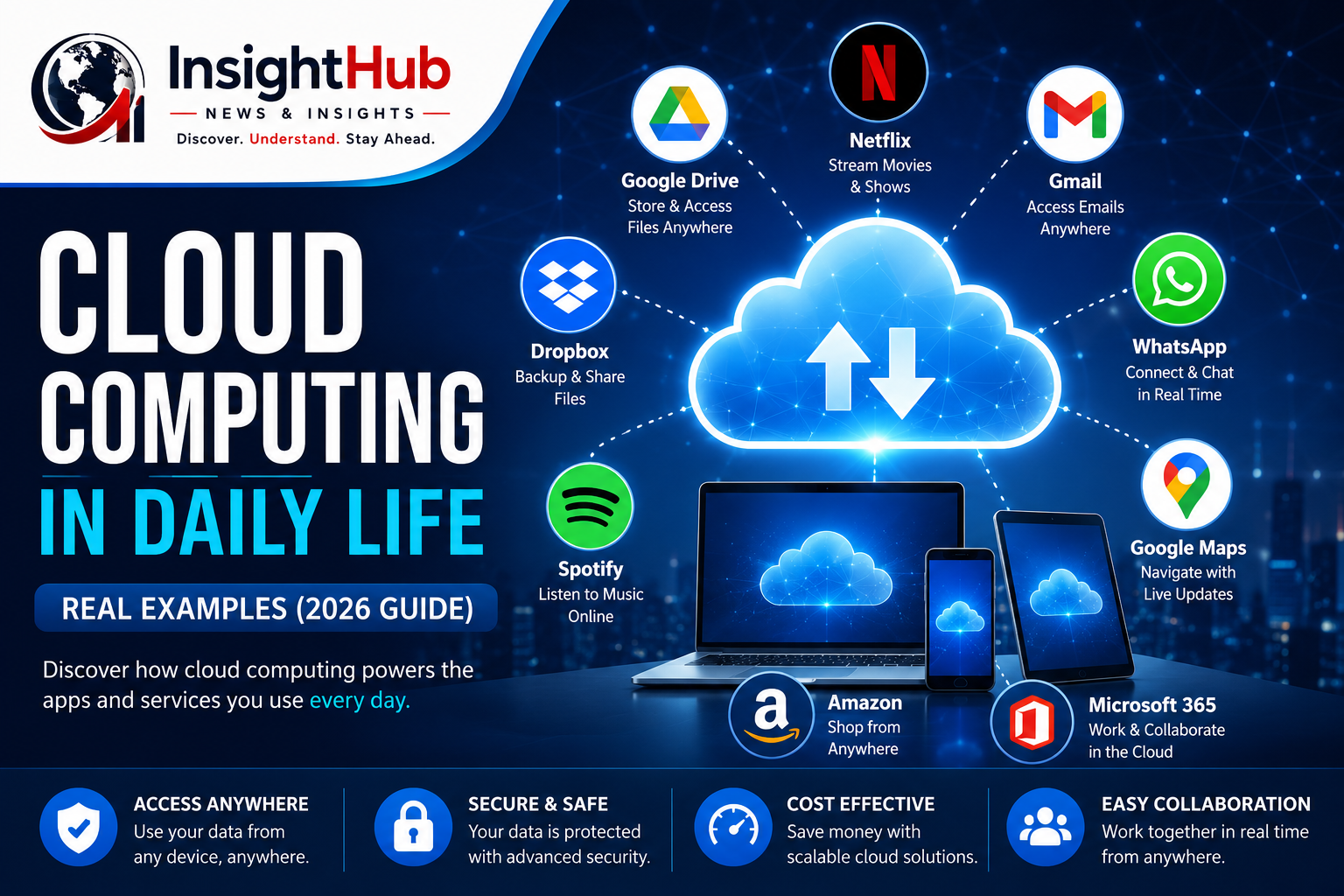
Cloud computing is everywhere in 2026-even if you don’t realize it. From streaming movies on Netflix to saving files on Google Drive and sending emails through Gmail, millions of people use cloud computing every day. But what are the real-life examples of cloud computing, and how does it work in daily life? In this complete guide, you’ll discover the most common cloud computing examples, real-world applications, and how this technology powers modern digital services across the globe.
Cloud computing is no longer just a technical concept—it has become a part of our everyday lives. Whether you are watching movies on Netflix, saving files on Google Drive, or checking emails on your phone, you are using cloud computing without even realizing it.
But what exactly are the real-life examples of cloud computing, and how does this technology impact your daily activities?
In this guide, we’ll break down cloud computing in simple words and explore the most common examples you use every day.
👉 If you're new, start here: What is cloud computing?
What is Cloud Computing? (Simple Explanation)
Cloud computing means storing data and running applications over the internet instead of using your computer’s hard drive.
👉 In simple terms: You access everything online—anytime, anywhere.
10 Real-Life Examples of Cloud Computing in Daily Life
1. Cloud Storage (Google Drive, Dropbox)
Cloud storage allows you to save files online and access them from any device.
✔ Upload files
✔ Access anywhere
✔ Share easily
2. Streaming Services (Netflix, YouTube)
When you watch videos online, content is delivered from cloud servers.
✔ No downloads required
✔ Instant playback
3. Email Services (Gmail, Outlook)
Emails are stored in the cloud, not on your device.
✔ Access from mobile or desktop
✔ Automatic backup
4. Social Media Platforms
Apps like Facebook and Instagram store your data in cloud servers.
✔ Photos & videos stored online
✔ Global accessibility
5. Online Banking & Payments
Cloud computing enables secure financial transactions.
✔ Real-time payments
✔ Secure systems
6. SaaS Applications (Google Docs, Zoom)
Software runs in your browser without installation.
✔ Work remotely
✔ Collaborate easily
7. Navigation Apps (Google Maps)
Uses cloud data for real-time updates.
✔ Traffic info
✔ GPS tracking
8. E-Commerce Platforms (Amazon)
Online shopping platforms rely on cloud infrastructure.
✔ Fast performance
✔ Scalable systems
9. Gaming (Cloud Gaming Services)
Games run on remote servers.
✔ No heavy hardware needed
✔ Play online instantly
10. Backup & Recovery Services
Cloud protects your data.
✔ Automatic backups
✔ Easy recovery
Quick Overview Table
| Service | Example | Use |
| Cloud Storage | Google Drive | File saving & sharing |
| Streaming | Netflix | Watch videos online |
| Gmail | Communication | |
| Apps | Zoom | Online meetings |
| E-commerce | Amazon | Online shopping |
Uses of Cloud Computing in Daily Life
Cloud computing is used in many everyday activities including online storage, video streaming, email communication, mobile apps, and business operations. Whether you're using Google Docs, watching YouTube, or accessing banking services, cloud technology is working behind the scenes to deliver fast and reliable experiences.
Cloud Computing Applications in Real Life
Cloud computing applications include online storage, software services, mobile apps, artificial intelligence systems, and enterprise business platforms. These applications allow users to access services without installing software or managing hardware, making technology more accessible and scalable.
Cloud Computing Across Global Markets
Cloud computing plays a vital role in digital transformation across countries like the United States, Canada, the United Kingdom, Australia, and India. Businesses in these regions rely on cloud platforms to improve scalability, reduce costs, and enable remote work environments.
As internet access expands globally, emerging markets such as India and the Philippines are also rapidly adopting cloud technologies, making it a truly global innovation.
Why Businesses Depend on Cloud Computing
- Scalability: Easily expand resources as business grows
- Cost Efficiency: Reduce hardware and infrastructure expenses
- Remote Accessibility: Enable teams to work from anywhere
- Performance: Faster deployment and better system reliability
Benefits of Cloud Computing in Daily Life
- Easy access to data
- Cost savings
- High security
- Automatic updates
- Global connectivity
Related Technologies
Cloud computing works closely with data science and artificial intelligence, helping businesses analyze data and automate processes efficiently.
Many modern devices rely on cloud technology. Check out our guide on Top 10 Gadgets in 2026 to see how cloud-powered devices are shaping the future.
FAQs
Why is cloud computing important?
It helps reduce costs, improve flexibility, and enable remote work.
What are real-life examples of cloud computing?
Cloud computing is used in services like Google Drive for file storage, Netflix for streaming, Gmail for email, Dropbox for sharing files, and iCloud for backups. These platforms store and process data on remote servers instead of local devices.
How do we use cloud computing in everyday life?
We use cloud computing daily when we:
Stream movies or music
Store photos online
Send emails
Use social media
Access apps like Google Docs
All these services rely on cloud infrastructure to function.
Is cloud computing safe for personal use?
Yes, cloud computing is generally safe. Most providers use encryption, secure servers, and multi-factor authentication. However, users should still use strong passwords and enable security features for better protection.
How does cloud computing help businesses?
Cloud computing helps businesses by:
Reducing IT costs
Enabling remote work
Providing scalable storage
Improving collaboration through shared tools
It allows companies to operate more efficiently without heavy hardware investment.
What is the difference between cloud computing and traditional storage?
Traditional storage keeps data on your device (like a hard drive), while cloud computing stores data on remote servers accessible via the internet. Cloud storage allows access from anywhere and better backup options.
Why is cloud computing important in 2026?
In 2026, cloud computing is essential because it supports:
Remote work and global collaboration
AI and big data processing
Scalable applications
Real-time services like streaming and gaming
It is the backbone of modern digital services.
Conclusion
Cloud computing has become an essential part of modern life. From simple daily tasks like sending emails and streaming videos to complex business operations, cloud technology powers everything behind the scenes. Understanding real-life examples of cloud computing helps you see how this innovation is shaping the future of digital services in 2026 and beyond.